TOCALO is adopting renewable energy sources and implementing other climate change initiatives to reduce CO_{2} emissions.
The Group’s CO_{2} emissions are primarily the result of the energy sources we use, which include primary energy derived from fossil fuels, such as kerosene, diesel oil, LPG, and city gas, and the secondary energy source of electricity. Converted to CO_{2}, electricity accounts for the vast majority—84.70%—of our CO_{2} emissions.
TOCALO takes meticulous steps to conserve electricity as a regular part of efficient business operations while also implementing measures including installing energy-saving equipment and upgrading aging equipment with environmentally efficient equipment.
We are also taking steps to convert to renewable energy sources that do not emit CO_{2} in power generation. These steps include aggressive measures to reduce CO_{2} emissions by using solar power to generate our own energy and by purchasing electricity generated from renewable energy sources.
In fiscal 2025, while power consumption decreased on both a non-consolidated and consolidated basis, sales increased, it shows the effectiveness of our energy-saving initiatives paid off. CO_{2} emissions per unit of sales also decreased. In particular, consolidated CO_{2} emissions were reduced by 8%, and CO_{2} emissions per unit of sales decreased by 15%.
- Adjusted emission coefficients had been applied by 2024. The basic emission coefficients have been applied from 2025.
- CO2 gas added in FY2021, acetylene gas been added in FY2022.
- Results for fiscal 2024 have been revised due to an aggregation error regarding CO2 emissions, CO2 emissions per unit of revenue, and electricity consumption.
TOPICS
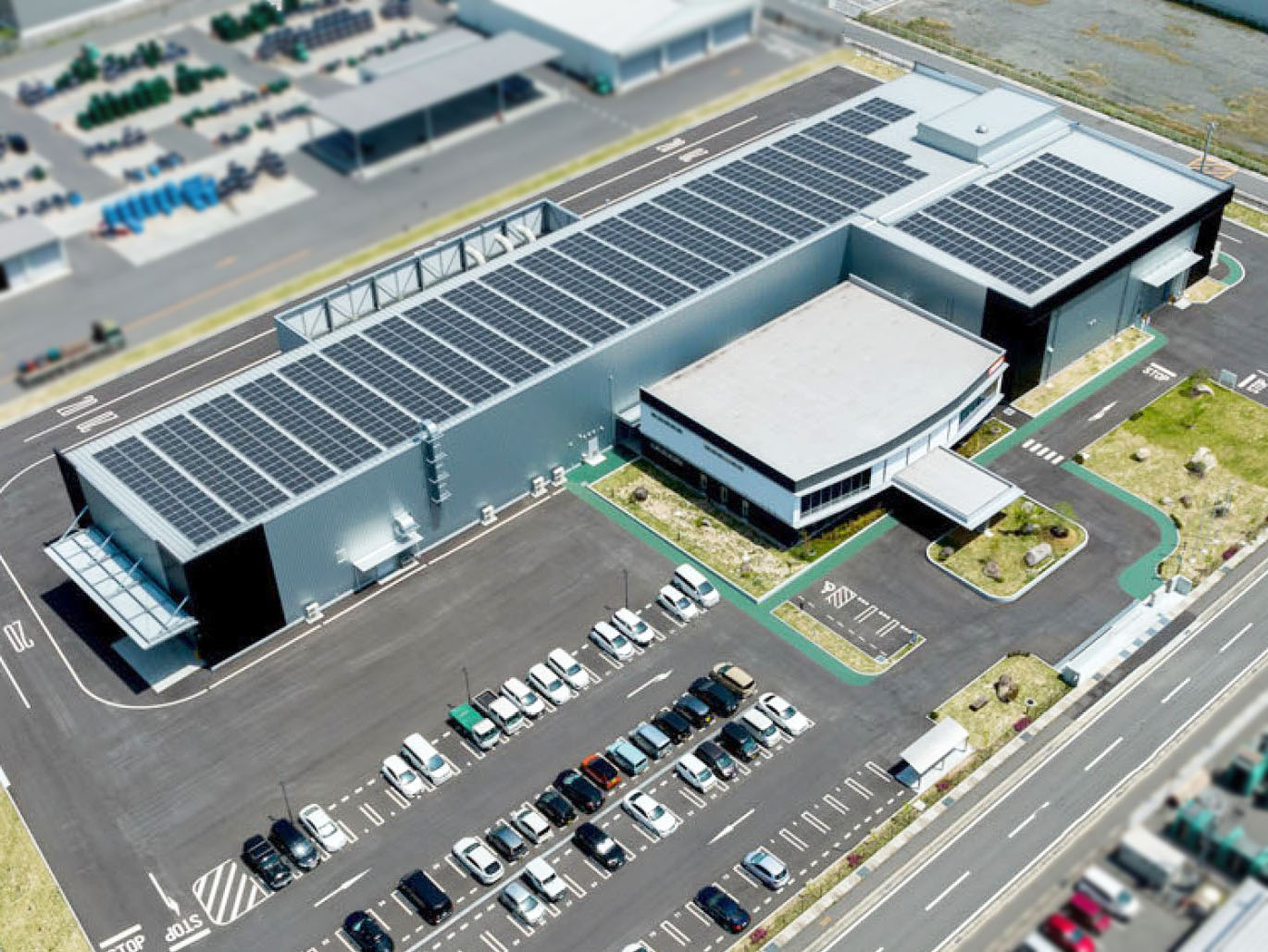
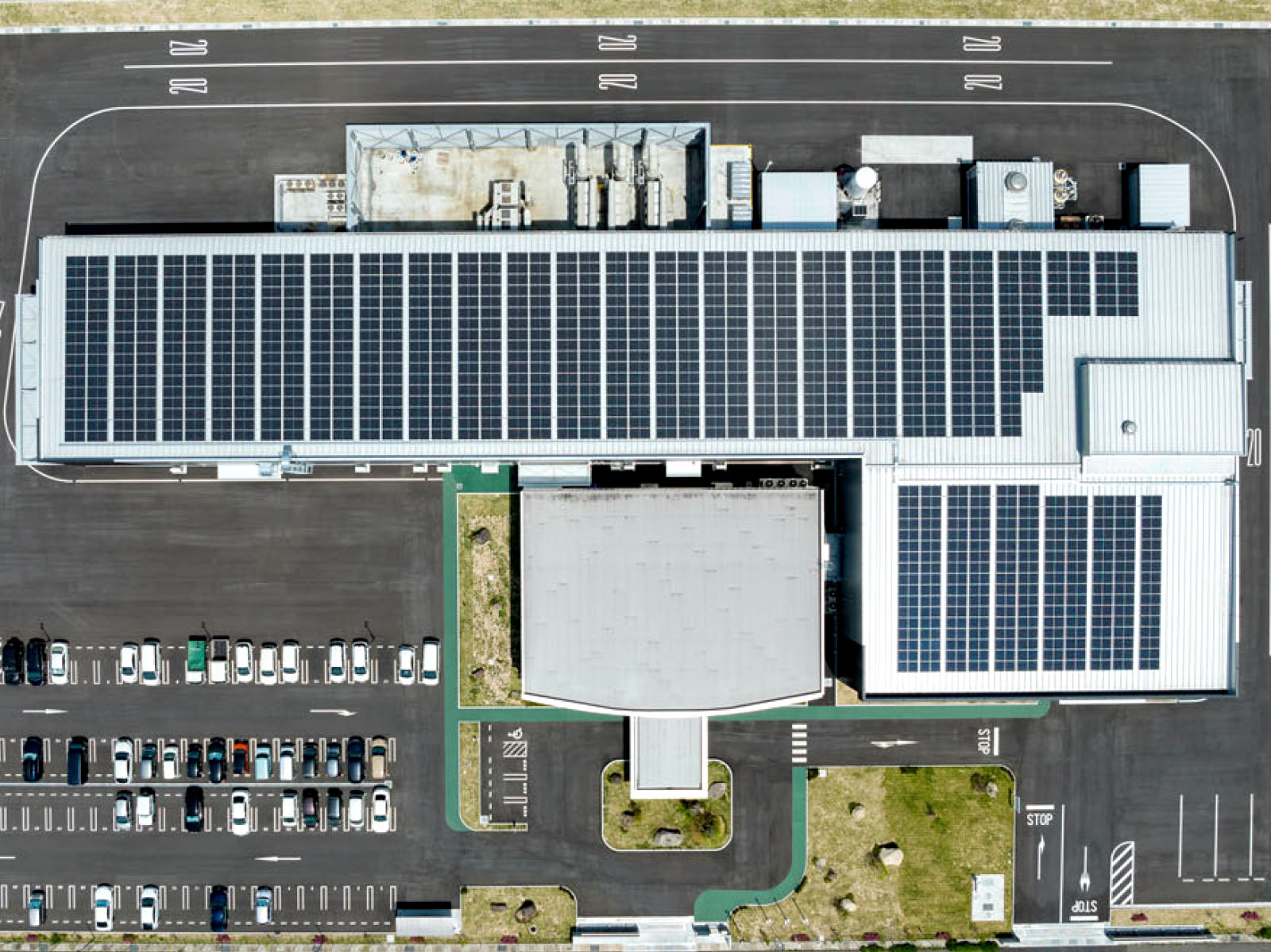
Okayama Prefecture is known as the “Land of Sunshine” for its low annual rainfall and generally sunny weather. The new plant we opened in Kurashiki, Okayama, in April 2022 is equipped with the Company’s first full-fledged in-house power generation system including approximately 3,500 square meters of solar panels on its expansive roof.
The Kurashiki Plant’s solar power system generated electricity covering 20% of the plant’s total electricity need in fiscal 2025.
We have also been installing solar panels at other sites. As of June 2024, all of our plants and the technical service center have solar panels and are generating their own power.
Along with improving the efficiency of our production operations, using in-house generated electricity to meet our energy needs is a key step to reducing our CO2 emissions. We plan to take this a step further by introducing in-house power generation that uses renewable energy sources to further reduce our environmental impact and greenhouse gas emissions.
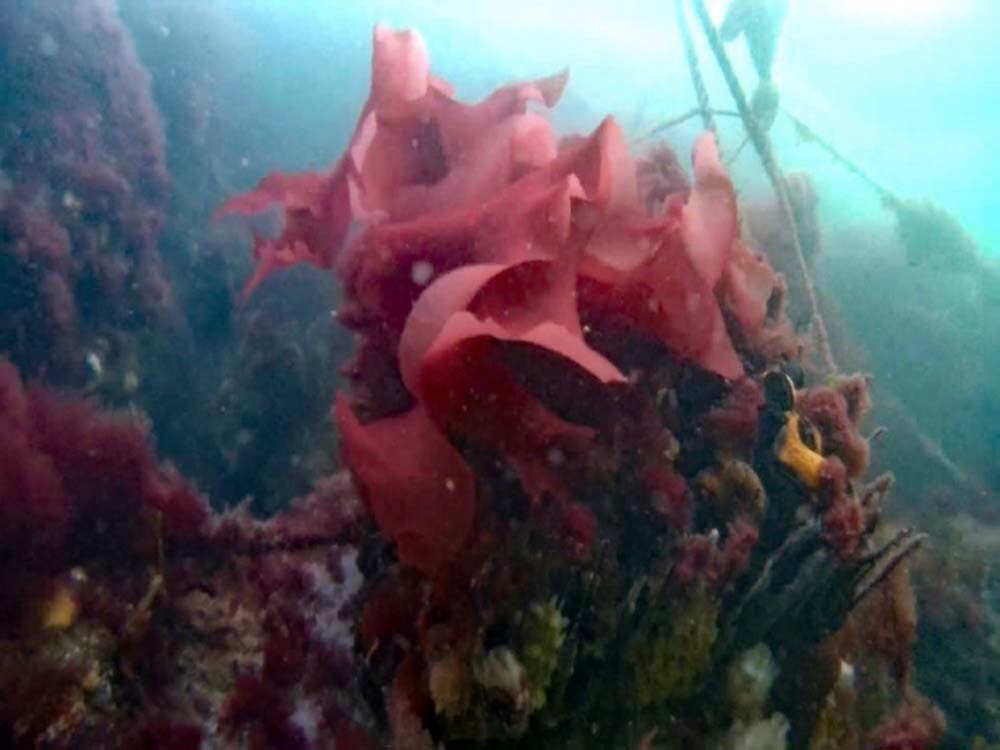
“Blue carbon” is attracting attention as a new countermeasure for global warming. Blue carbon is the carbon that is absorbed by seaweed, sea grass, phytoplankton, and other sea organisms.
Kobe City is promoting blue carbon in its Kobe Airport Island Blue Carbon Project, which focuses on the various types of seaweed growing on the gentle stone seawall around Kobe Airport Island. The Japan Blue Economy Association certified the volume of CO2 that the ecosystem is absorbing under its J Blue Credit program in 2022.
As a company headquartered near Kobe Airport, in 2023 we purchased J Blue Credits equivalent to absorbing 3.9 tons of CO2 as one of our measures to counteract global warming. Through initiatives like J Blue Credit, we will continue to work with local communities to reduce our environmental impact.
Kobe City Carbon Neutral Port Initiative:
https://www-city-kobe-lg-jp.translate.goog/a49918/cnp.html?_x_tr_sl=ja&_x_tr_tl=en&_x_tr_hl=en
Carbon Neutral Ports Initiative:
https://www.mlit.go.jp/en/kowan/kowan_fr4_000011.html
Kobe City is promoting blue carbon initiatives to make Kobe Port a Carbon Neutral Port (CNP).
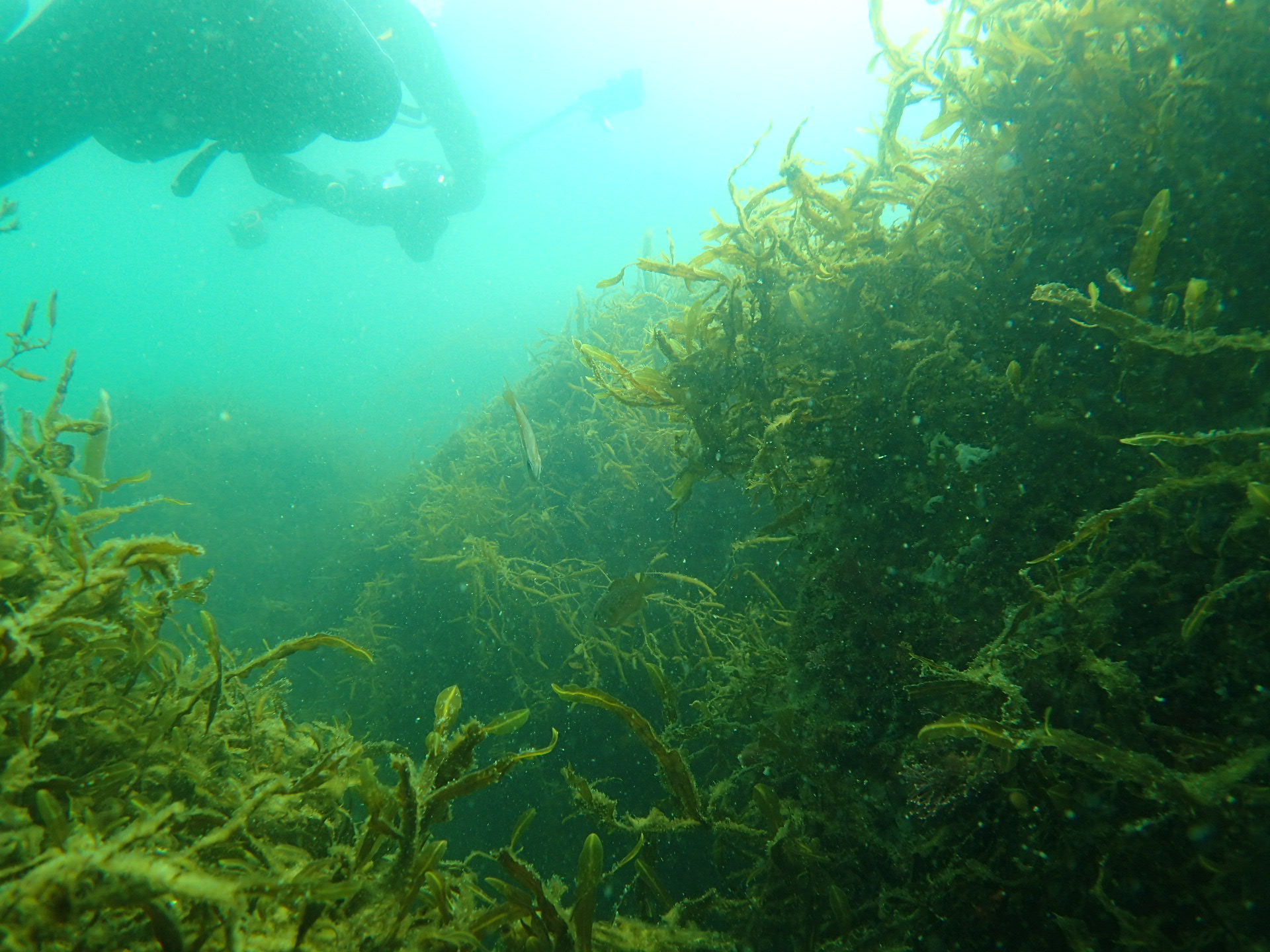
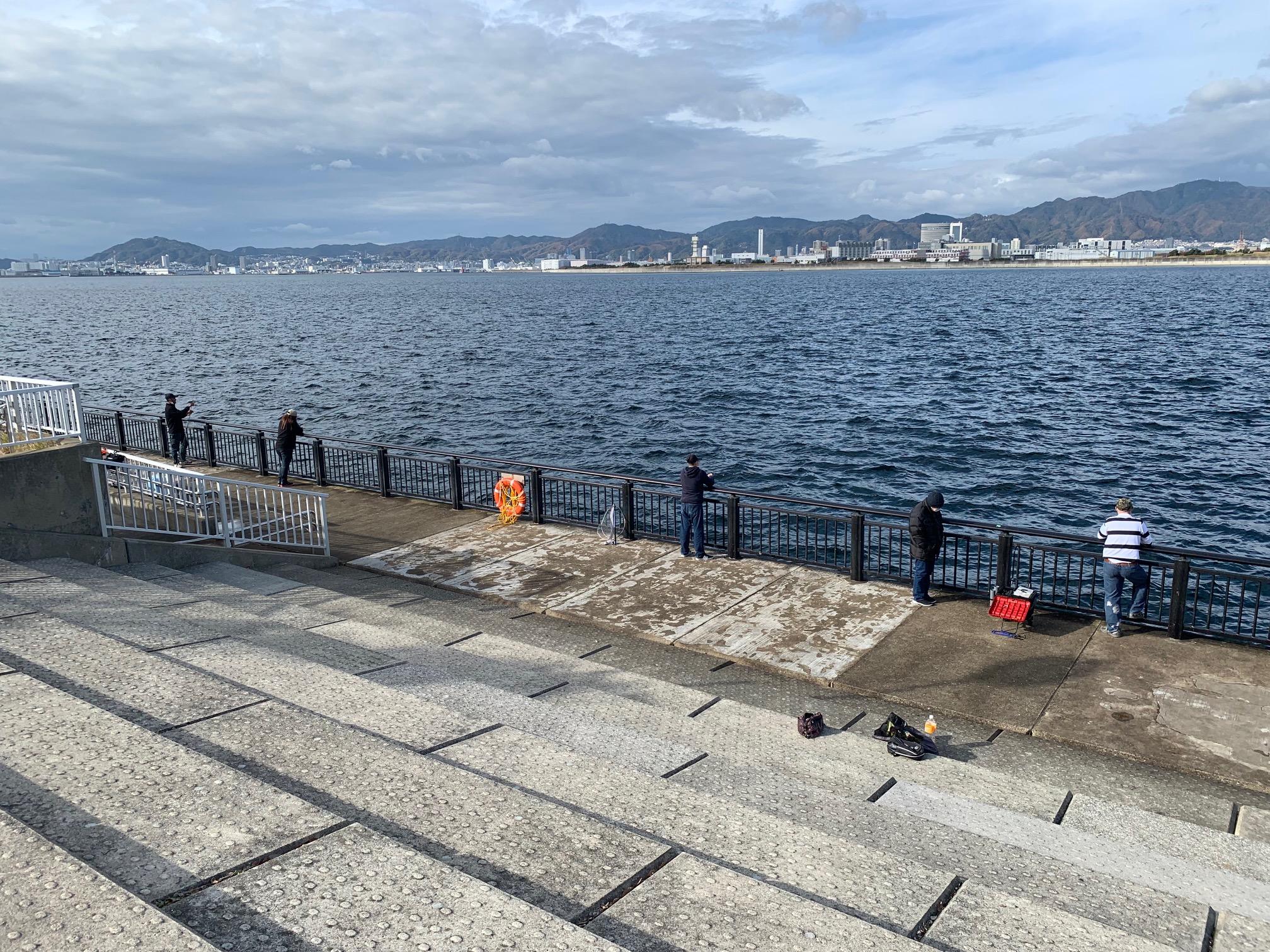
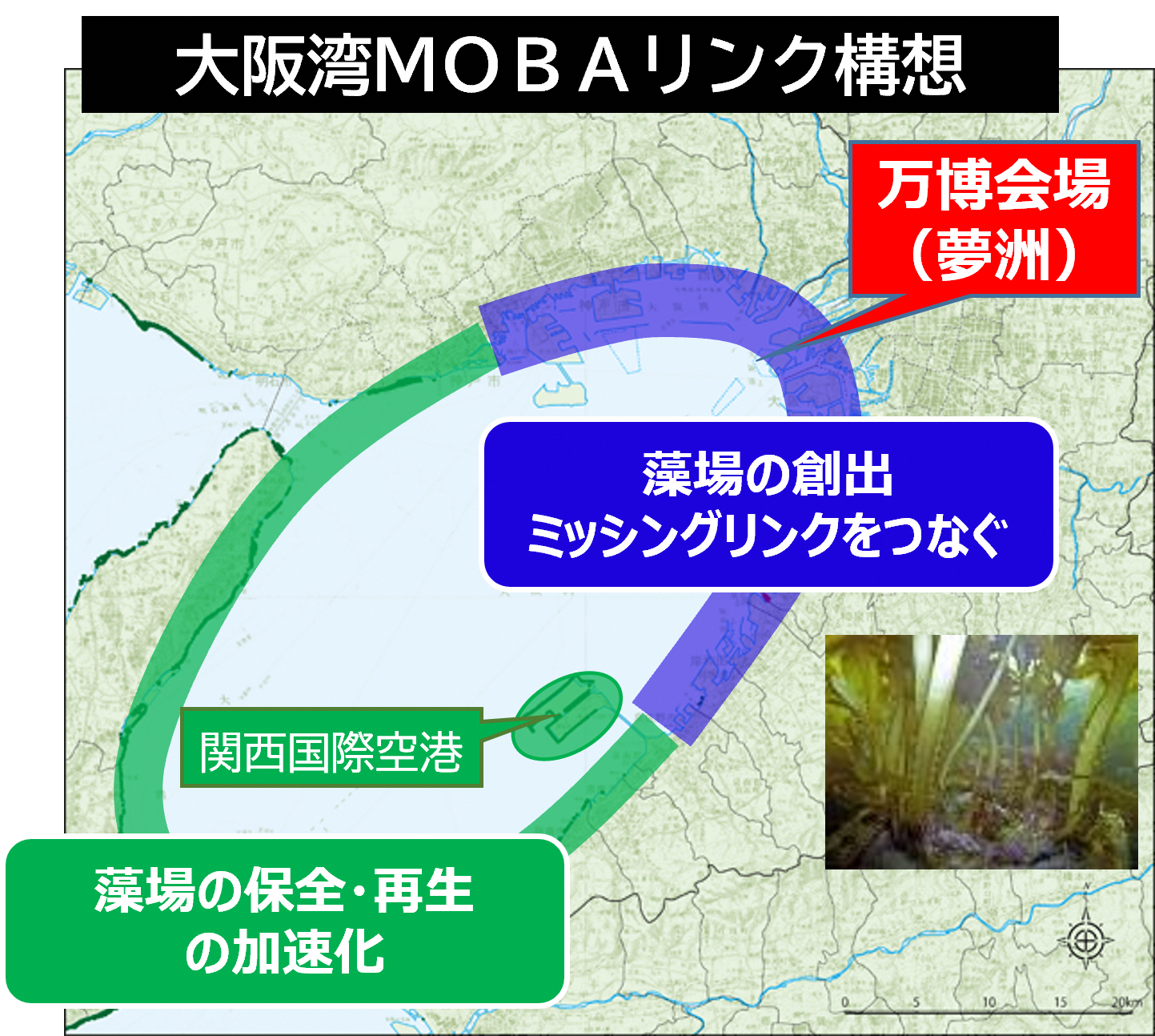
Blue carbon ecosystems benefit the environment in numerous ways, such as absorbing and fixing CO2, improving water quality, and improving biodiversity. Taking the opportunity of the staging of World Expo 2025 in Osaka in the Kansai region, the prefectures of Osaka and Hyogo established the Members of the Osaka Bay Blue Carbon Ecosystem Alliance (MOBA) in January 2024 and are planning the Osaka Bay MOBA Link Concept to connect the entire Osaka Bay with a corridor of blue carbon ecosystems.
The TOCALO Headquarters, Kobe Plant, Akashi Plant, Akashi-Harima Plant, and Thermal Spraying Technology R&D Laboratories all face Osaka Bay, and we joined the Osaka Bay MOBA Link Concept to contribute our surface modification technology to realizing the concept’s goals.
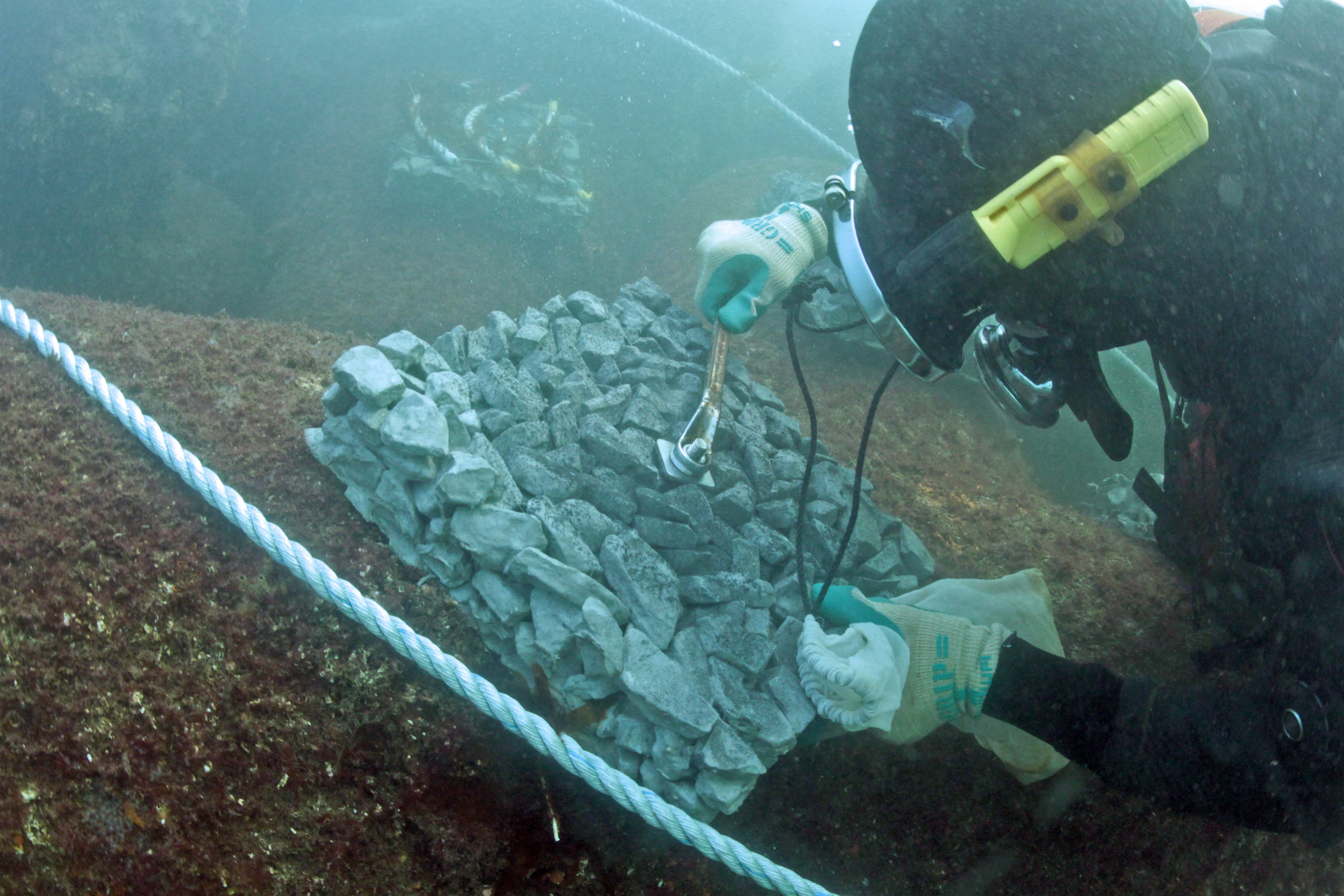
Our efforts to develop and apply surface modification technologies to create habitats where algae can flourish also give us an opportunity to accumulate valuable elemental technologies.
Global warming has progressed to such an extent that the United Nations Secretary-General António Guterres said, “The era of global warming has ended; the era of global boiling has arrived.” We are participating in the Osaka Bay MOBA Link Concept to help realize its goal as quickly as possible and with the hope that the concept will be adopted in other places around the world.
For the latest information about the Osaka Bay MOBA Link Concept please visit
https://www.pref.osaka.lg.jp/o120070/kankyohozen/osaka-wan/moba.html (Japanese language only)
CDP is an international non-profit organization headquartered in London created in collaboration with institutional investors to collect information on environmental strategies and greenhouse gas countermeasures from major companies around the world. CDP analyzed the data and publishes the results.
In fiscal 2025, CDP evaluated some 22,100 companies—representing more than half of the worldwide market capitalization—on an eight-point scale for environmental disclosure and performance. In the 2025 CDP questionnaires, TOCALO received a B score, the third highest, for climate change for the third consecutive year, and a B score, also the third highest, for water security, up by a notch compared to last year. Furthermore, the company earned an A score, the highest rating, for the first time in the Supplier Engagement Assessment.

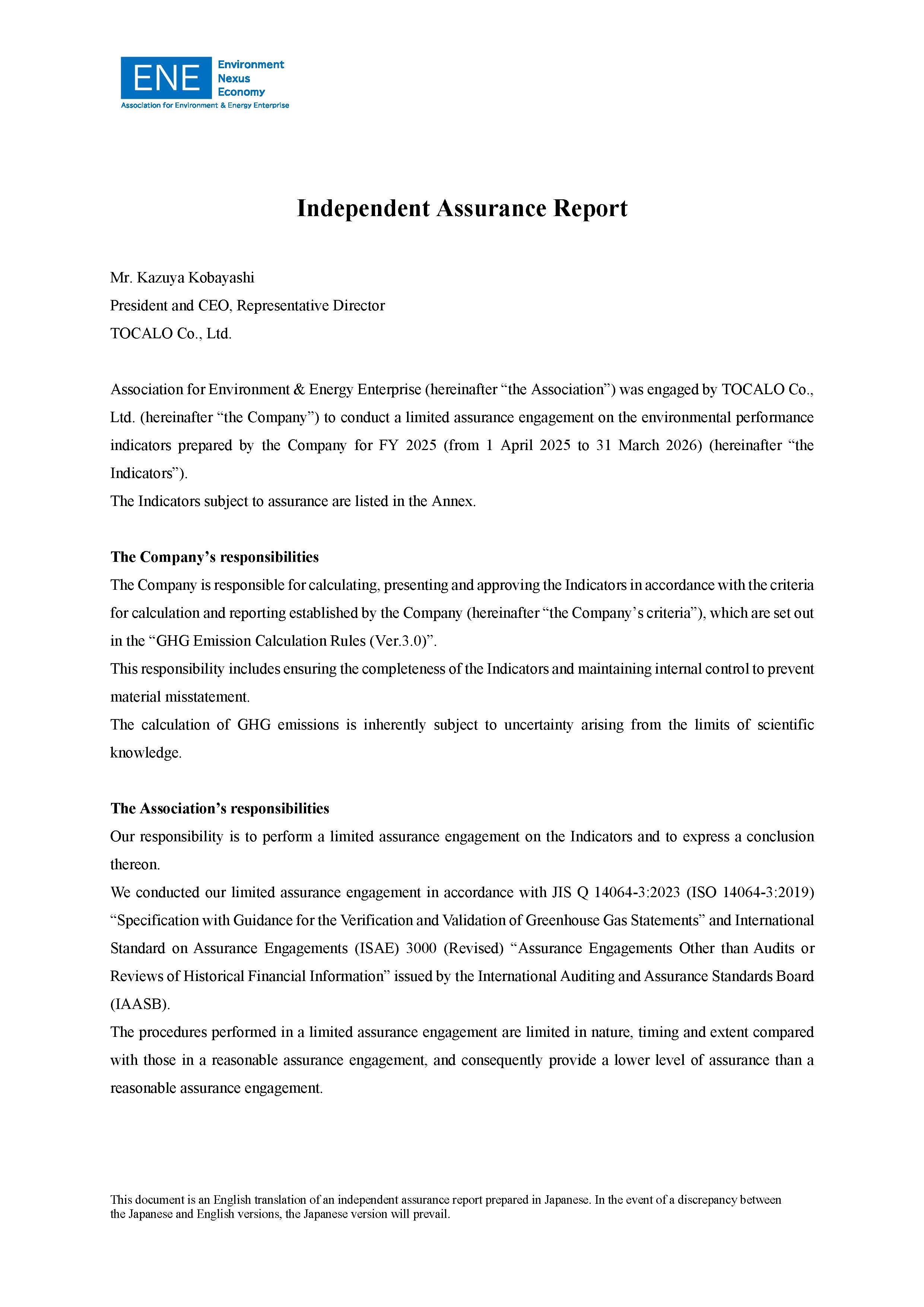
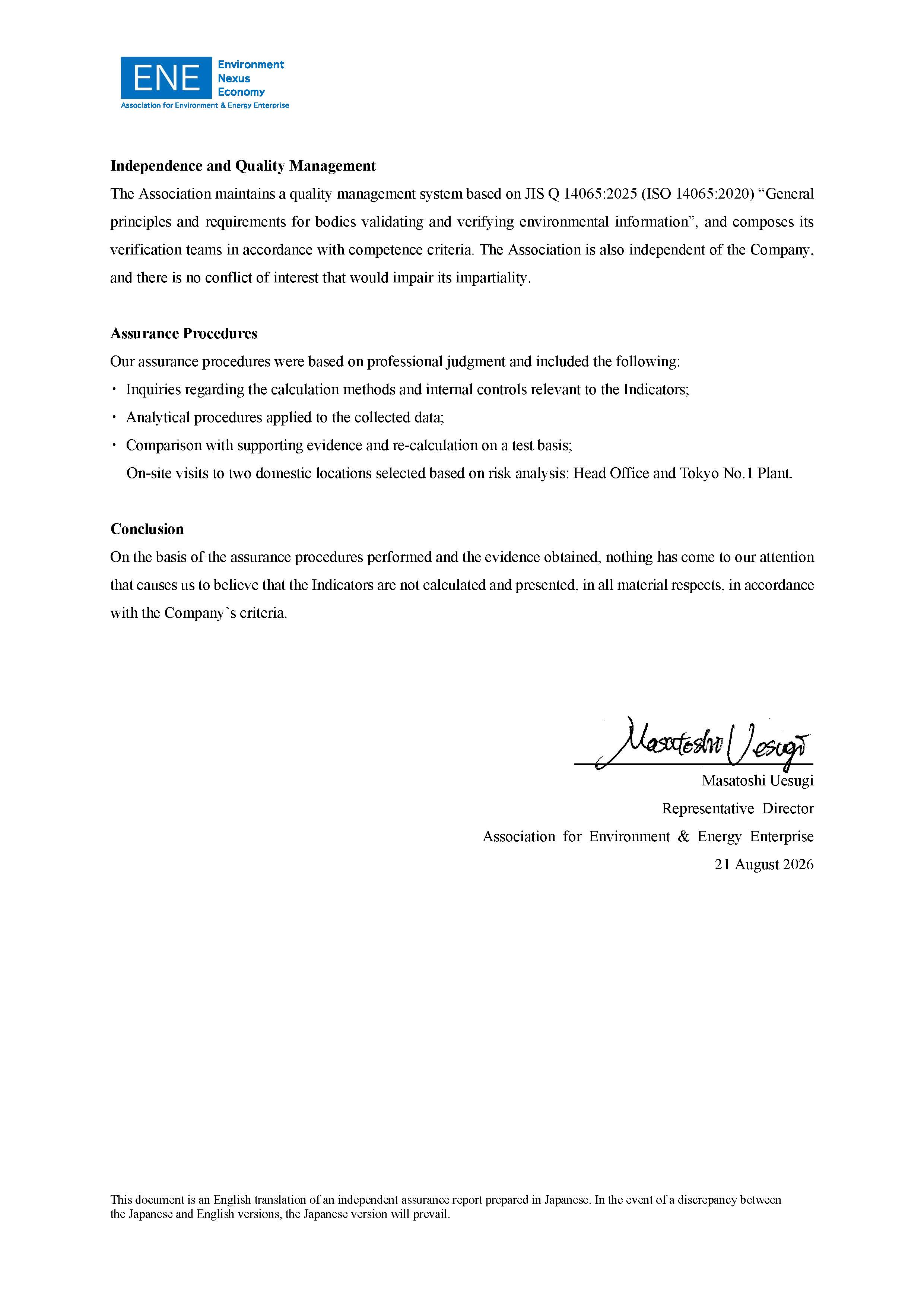
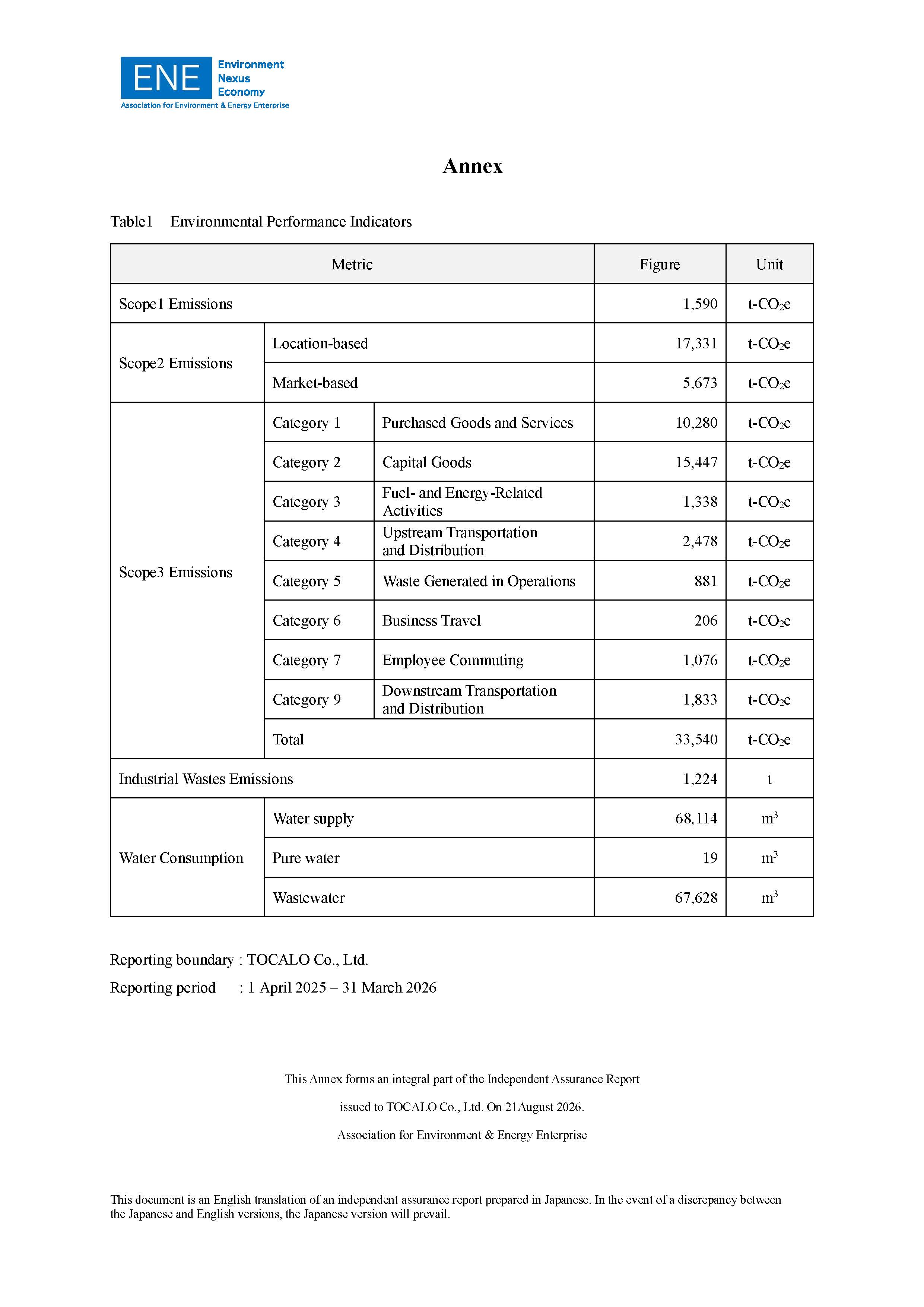
To ensure our environmental data is transparent and accurate, TOCALO engaged third parties to verify the environmental data for fiscal 2025(April 2025 to March 2026) related to greenhouse gas emissions (Scope 1, 2, and 3), water consumption, and industrial waste emissions.
-
 Independent Assurance Report 2026
(465KB)
Independent Assurance Report 2026
(465KB)
-
Independent Assurance Report 2025
(396KB)
-
Independent Assurance Report 2024
(1,293KB)